
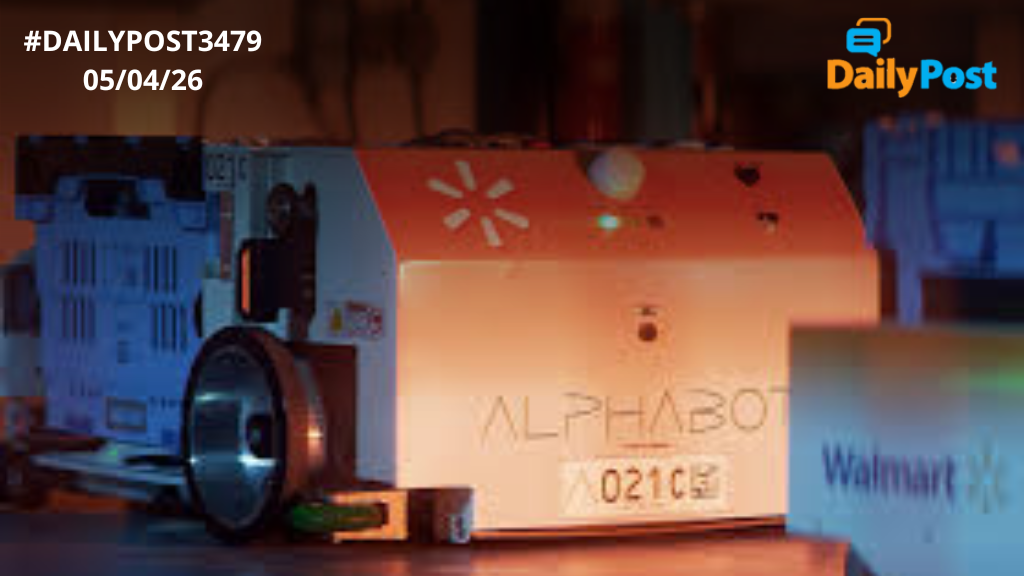
Amazon’s Project Kobe unveils massive 225,000-square-foot hybrid supercenters, blending big-box retail with robot-packed fulfillment centers. Nearly half the space is dedicated to automation like AutoStore systems for picking and packing, plus an upcoming in-house platform called Orbital. Leaked docs show the first site in Orland Park, Illinois, opening late 2027, with more in New Jersey and Illinois planned.
This isn’t just expansion—it’s Amazon’s bold strike at Walmart’s 21% U.S. grocery dominance, where Amazon lingers at 3%. Robots flip the script on retail efficiency. Project Kobe integrates warehouse ops directly into the storefront. AI like Frida automates local inventory decisions, slashing overstock and stockouts. Robots would zip orders to doorsteps in minutes — merging physical foot traffic with e-commerce speed.
Walmart’s supercenters feel clunky by comparison; Amazon’s model cuts costs 20-30% via automation, per industry benchmarks. E-commerce and physical retail finally collide under one roof. Project Kobe dissolves silos: online orders fulfill alongside in-store picks, with shared robotics handling both. Critical functions like inventory, last-mile delivery, and dynamic pricing integrate seamlessly — Frida’s AI could even personalize shelves based on local data.
This hybrid crushes pure-play e-tailers and brick-and-mortar giants alike, echoing Amazon’s playbook in books and electronics but scaled to perishables. The tech stack—robotics, AI forecasting, and modular fulfillment—rewires Amazon’s business model from delivery-focused to omnichannel dominance. Walmart scrambles to match, but Amazon’s data moat gives it the edge. Expect pilots to spawn a national rollout if margins hit 10-15%.
ROBOTS AREN’T COMING—THEY’RE ALREADY REDRAWING RETAIL’S BATTLE LINES!