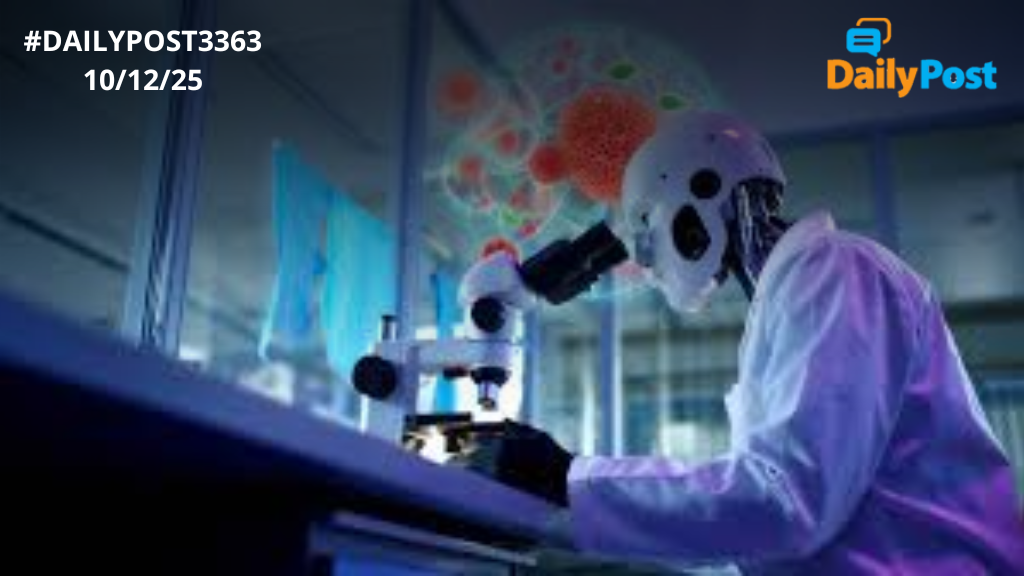
From AlphaFold to GigaTIME, the world of diagnosis, treatment, research and medicine itself seems to have already changed forever. Advanced tumor mapping used to be a long, costly process — the kind that demanded specialist labs, high-end imaging systems, and days of analysis. Microsoft’s new open-source GigaTIME model has just flipped that equation. Now, with nothing more than a $10 tissue slide, a researcher can map and analyze 40 million cell samples in seconds.
AI has innovated and abridged processes with precision for the benefit of mankind’s health. What once took weeks and deep-pocketed budgets is suddenly a near-instant, low-cost process. The model uses large-scale AI vision to interpret data from digital pathology slides, offering insights into tumor structures that can guide faster and more precise treatments.
By open-sourcing GigaTIME, Microsoft hasn’t just built a high-tech diagnostic engine—it’s removed the barriers that often confine such innovations to elite research labs. Any hospital, startup, or academic team can now plug into cancer-level mapping power. This is true democratisation of AI research and the outputs thereof, with very far reaching consequences. That accessibility is what makes this breakthrough different.
It democratizes one of the most critical steps in oncology research: understanding how cells behave, mutate, and spread. Instead of waiting for lab reports that take days, clinicians could generate maps of tumor activity in real-time, speeding up diagnostics and personalizing treatment for patients anywhere in the world. If the genomics revolution made medicine personal, GigaTIME makes it instantaneous — a leap that could redefine the front lines of cancer care. The reach of any diagnostic tool is its real value.
AI JUST GAVE THE MICROSCOPE SUPERPOWERS.