Demis Hassabis says AGI could arrive around 2030 ±1 year — a bolder timeline as DeepMind’s models move from prediction to purposeful action. The main technical gaps he names are clear: physical-world understanding, longer reliable memory, consistent cross-context reasoning, and continual learning without catastrophic forgetting. Closing them is what will turn agentic systems into truly general ones.
Progression to agentic AI made that timeline plausible: we moved from supervised pattern-matching to large self-supervised models, then to agents that plan, explore, and use tools. Each step—language models, multimodal grounding, reinforcement learning, and tool use — adds autonomy and generality. To reach AGI we need seamless integration: durable memory systems, causal world-models, robust continual learners, and safe long-horizon planning.
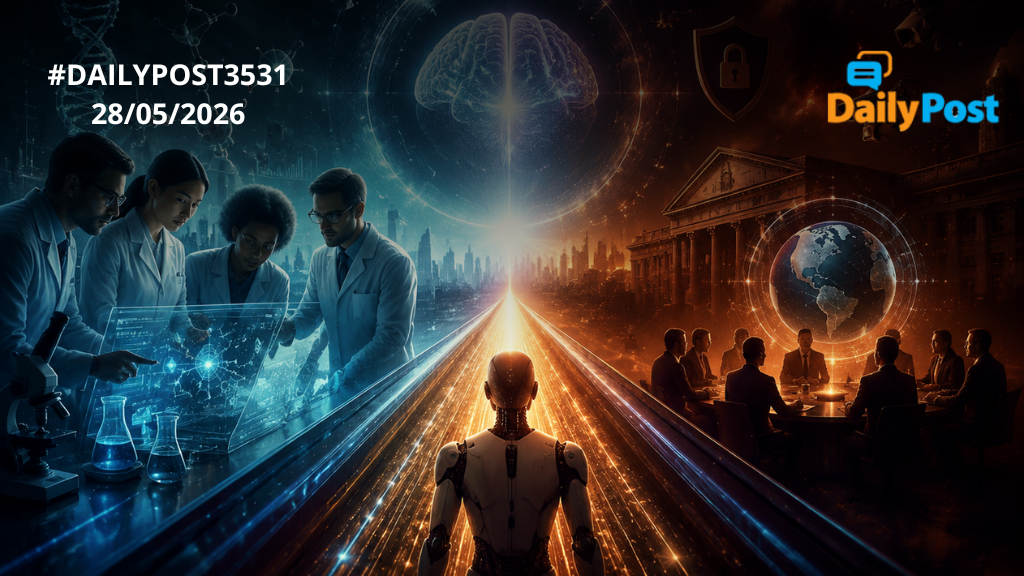
If AGI arrives, the world will change fast: scientific discovery (Hassabis highlights oncology and immunology) could accelerate, creativity will be amplified, and control of AGI will reshape economies and geopolitics. Everyday life will shift as students and creators wield far more powerful assistants, while human strengths like taste, empathy, and value-judgment grow in importance. Rapid capability gains also raise systemic risks; so capability and governance must progress together.
Hassabis’ wishlist is a playbook for responsible deployment: rigorous security engineering, transparent capability reporting, clear governance frameworks, international coordination on standards and protocols, and strong incentives for safety research. He stresses cultural change too—teaching people to use advanced AI wisely—and long-term institutional preparation across law and education.
SPEED UP DISCOVERY, SLOW DOWN RISKS.
Sanjay Sahay
Have a nice evening.