
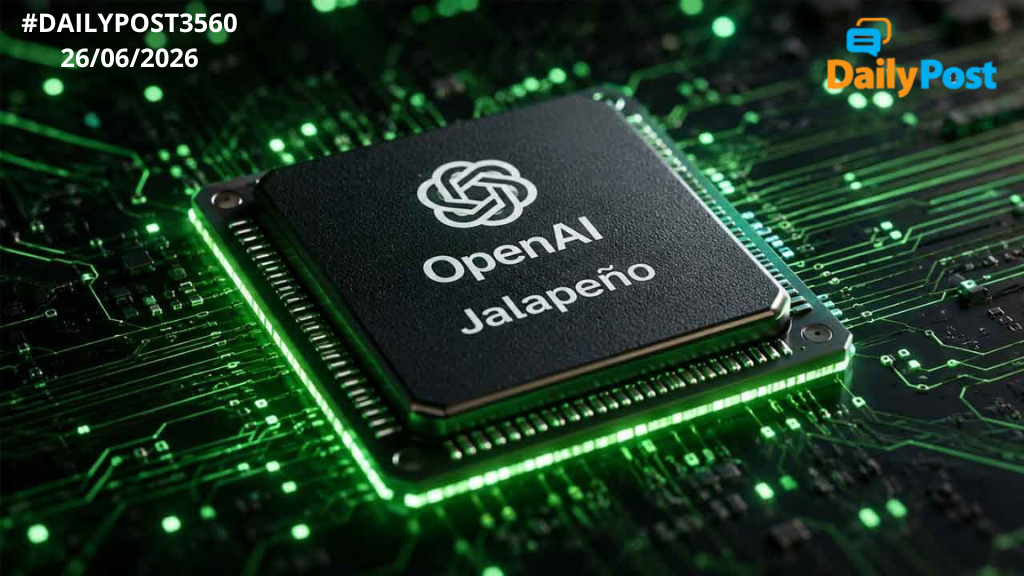
OpenAI’s new custom chip, Jalapeño, marks a major shift from being a model maker to becoming a full-stack AI company. Built with Broadcom in just nine months, it is designed to run finished AI models more efficiently and reduce OpenAI’s dependence on Nvidia for every layer of compute.
What makes this notable is not just the chip itself, but the speed of development. OpenAI says its own models helped with the design and optimization process, which shows how AI is now being used to build better AI infrastructure. That creates a powerful feedback loop where the company improves both its products and the hardware underneath them.
The broader competition here is clear. By owning more of the stack — chips, models, and applications — OpenAI can lower costs, improve performance per watt, and move faster than rivals that rely entirely on outside suppliers. That could force established players to rethink how they build, deploy, and scale AI systems.
Jalapeño may not replace Nvidia overnight, but it signals a new phase in the AI race. The real significance is strategic: OpenAI is trying to complete the chain from intelligence to infrastructure, and that brings it closer to true independence.
THE FUTURE OF AI MAY BELONG TO THOSE WHO OWN NOT JUST THE MODELS, BUT THE MACHINE THAT RUNS THEM.
Sanjay Sahay
Have a nice evening.