
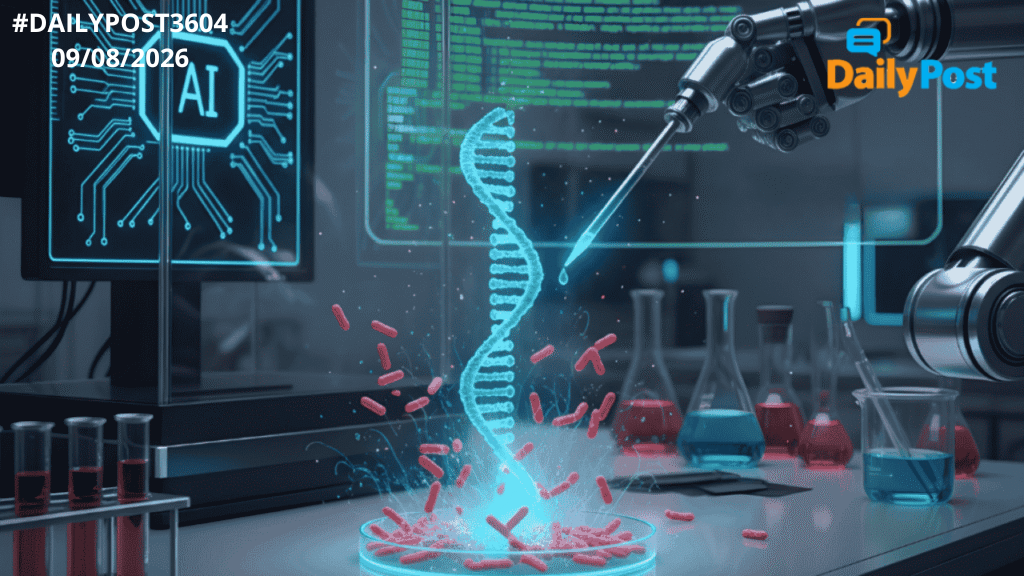
Scientists used AI to write the genetic code of 16 brand-new viruses not found in nature, then built them in the lab and saw them work. These are not human viruses; they are “bacteriophages” that only infect and kill bacteria like E. coli. The aim is to use such AI-made viruses as living medicines against drug‑resistant bacterial infections.
The concern is simple: the same AI that can design helpful bacteria-killing viruses could, if trained differently, also help design dangerous germs. In this study, researchers avoided that by never training the models on viruses that infect humans, animals or plants. Still, because the core AI tools are powerful and partly open, many experts say strong rules and safety checks are now urgently needed.
For the common person, the upside is clear: new weapons against superbugs that no longer respond to antibiotics. If this works in patients, it could mean shorter hospital stays, fewer deaths from untreatable infections, and less reliance on last-resort drugs. The downside is the fear that bad actors could one day misuse similar tools to create harmful pathogens, much like hackers repurpose software for cyberattacks.
So the big question is not just “can AI design life?” but “how do we make sure it only designs safe, useful life?” This news pushes governments, labs and tech companies to set up strict screening, access controls and international guardrails before the technology spreads further. For ordinary people, it matters because it could change how we fight infections — and how safely we handle powerful new biology.
AI CAN CURE SUPERBUGS—OR COULD IT CREATE NEW ONES?
Sanjay Sahay
Have a nice evening.