
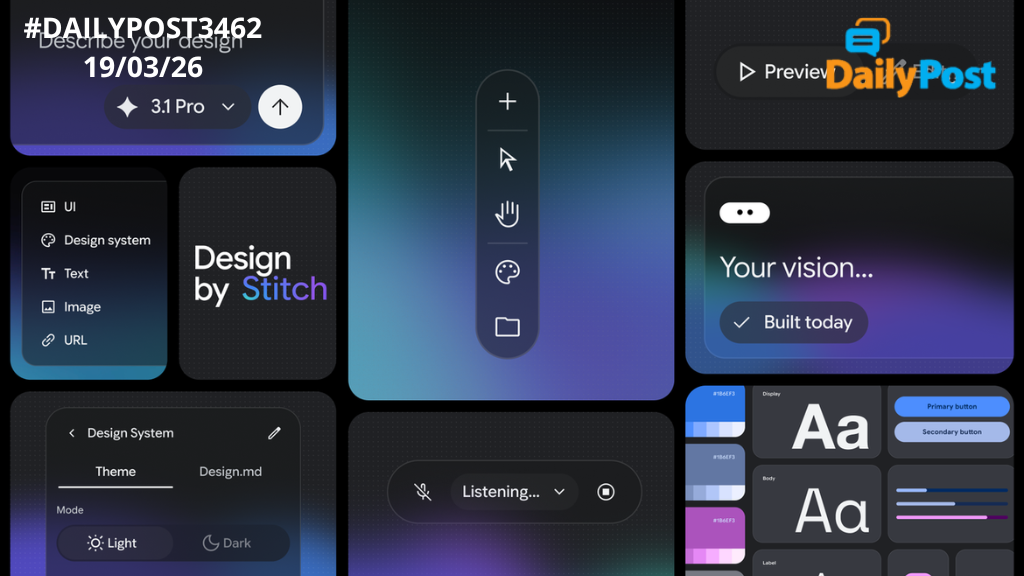
Last year, “vibe coding” transformed software development by collapsing weeks of painstaking work into fluid, conversational prompts powered by AI. Now, Google is betting big on a parallel revolution in UI design with its overhauled Stitch tool. Dubbed “vibe design,” this approach promises to make professional-grade interfaces accessible through casual chats, much like its coding predecessor.
Stitch now features an expansive infinite canvas where users can drop in images, code snippets, or project briefs to kickstart creativity. At its heart is a smart agent manager that juggles multiple design directions simultaneously, exploring variations without overwhelming the user. The standout new voice editing capability, currently in preview, turns Stitch into a hands-free collaborator.
Instant prototyping takes this further by converting static design screens into fully interactive, clickable prototypes in mere seconds, complete with logical next-screen predictions for smooth UI flows. Teams benefit from the innovative DESIGN.md format, which exports design rules and style systems directly into coding environments, ensuring consistency from prototype to production.
Agentic capabilities sit at the core of this transformation, enabling autonomous handling of complex tasks just as they did in vibe coding’s breakthrough. Yet, as we’ve seen across AI tools, the real hurdle isn’t proof-of-concept demos—it’s achieving industrial-scale adoption for the long haul. From flashy showcases to everyday enterprise use, vibe design must bridge that gap to redefine how we build interfaces.
VIBE WAY: THE AI AGE’S LONG-HAUL FORCE MULTIPLIER!