
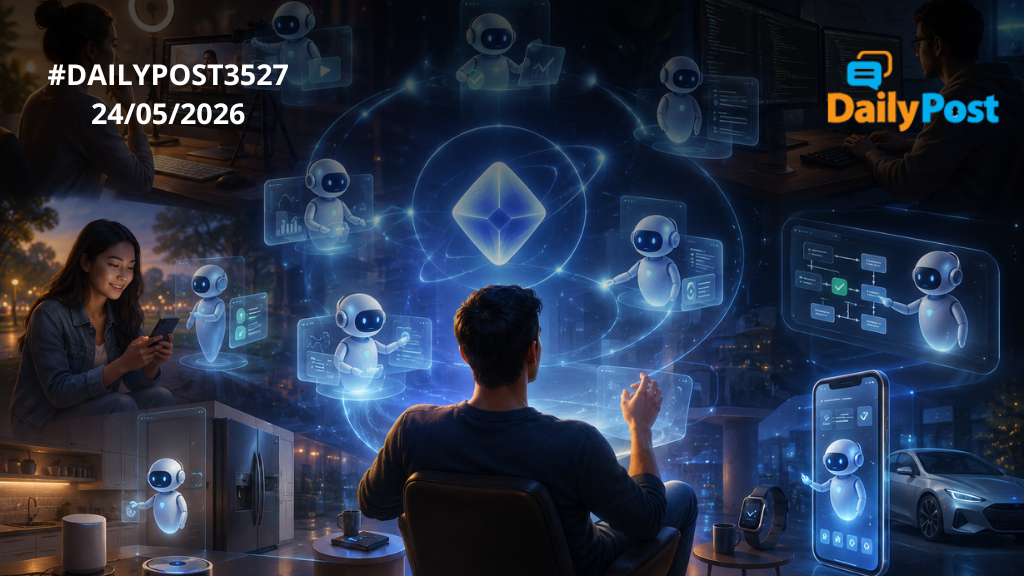
Google’s announcements at I/O 2026 show a clear shift: the company is no longer just adding AI to its products but rebuilding them around autonomous “agents” that act on your behalf. Sundar Pichai described this as a top‑to‑bottom redesign of how Google works, so that AI quietly handles routine tasks while users focus on ideas and creativity. This shift means having systems that can plan, execute, and iterate across apps and devices.
Pichai told The Rundown that models like Gemini Omni are designed to help creators express themselves more powerfully—especially on YouTube—while keeping the platform “creator‑first” and preserving the human‑to‑human connection. He argued that everyday users should switch to Gemini because agents can run in the background, making AI feel less like a tool and more like a silent assistant working 24/7.
For engineers and developers, Pichai emphasized “agentic coding”: instead of measuring success by lines written by AI, he stressed that the real value lies in agents that can sustain long‑running tasks, debug systems, and manage complex workflows over time. On stage and in dialogues at I/O, deeper integration into Android and web development was showcased, so that developers can orchestrate multiple AI “teammates” instead of writing every step manually. This redefines programming.
For creators, coders, and regular users alike, Pichai’s message is that the AI paradigm has already shifted: the winners won’t be those who cling to old workflows but those who become “native” to agent‑driven tools from day one. His vision is a world where AI handles the grind while humans define the goals, curate the outputs, and stay in the loop where judgment and empathy matter most.
IN THE NEW AI ERA, BEING COMFORTABLE WITH AGENTS WILL BE AS ESSENTIAL AS KNOWING HOW TO USE A SMARTPHONE.
Sanjay Sahay
Have a nice evening.