
Robotaxis are driverless taxis that use cameras, sensors, and artificial intelligence to carry passengers without a human driver. The idea began with the U.S. DARPA Grand Challenge in 2004, which encouraged teams to build self-driving vehicles. Google started its self-driving car project in 2009, which became Waymo in 2016. Waymo launched its public driverless taxi service, Waymo One, in Phoenix in 2020.
Before launch, robotaxis were tested with safety drivers, digital simulations, detailed road maps, and millions of miles of real-world driving. Waymo’s early testing included California highways, especially Interstate 280, from 2009. The trials proved that the cars could manage normal traffic, but difficult situations such as construction zones and emergency vehicles remained challenging.
Waymo started passenger freeway rides in San Francisco, Phoenix, and Los Angeles on November 12, 2025, and later expanded them to Miami and Austin. Freeway access made many trips faster, including journeys to San Francisco airport. But in May 2026, Waymo cars entered active construction zones, causing a pause and a software recall; the service returned in July after a fix.
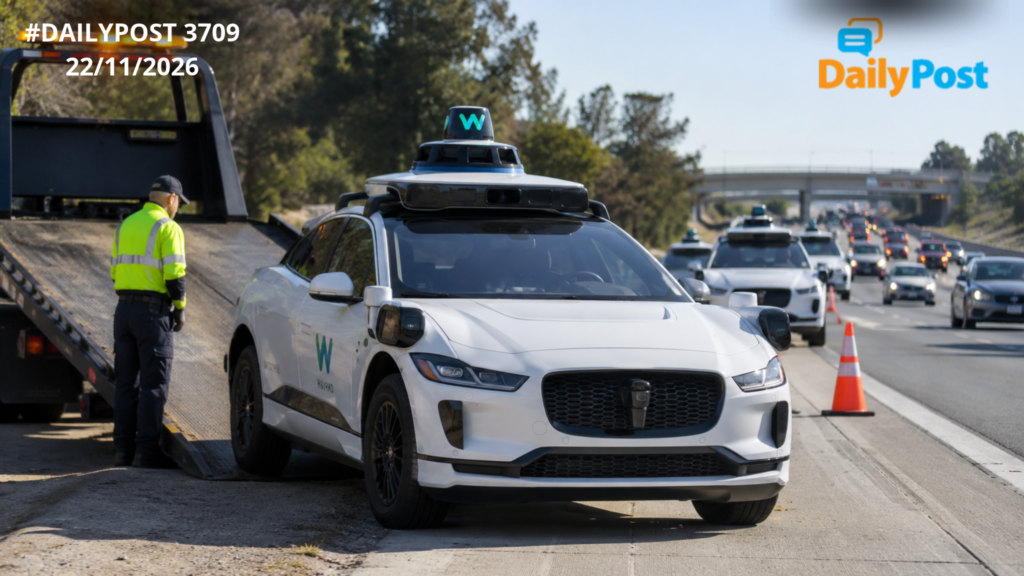
The problem returned in November 2026, when three Waymos entered a construction closure on US-101 near Burlingame and another tried to pass a police traffic break on I-280. California’s DMV called this an “imminent hazard” and banned Waymo from state freeways on November 11, leading Waymo to suspend freeway rides across all its U.S. markets. A separate San Diego incident, where a driverless Waymo got stuck on trolley tracks and reversed through crossing gates, further raised safety concerns.
A SELF-DRIVING CAR IS ONLY AS SAFE AS ITS WORST DECISION.
Sanjay Sahay
Have a nice evening.