SpaceXAI’s partnership with Cursor has tightened Grok’s training pipeline and product engineering. Cursor contributed model-building expertise, deployment tooling, and token-efficiency optimizations that improved code reasoning, agentic behavior, and real-world robustness. The collaboration focused on faster throughput and lower operational cost, shaping Grok into a more production-ready offering.
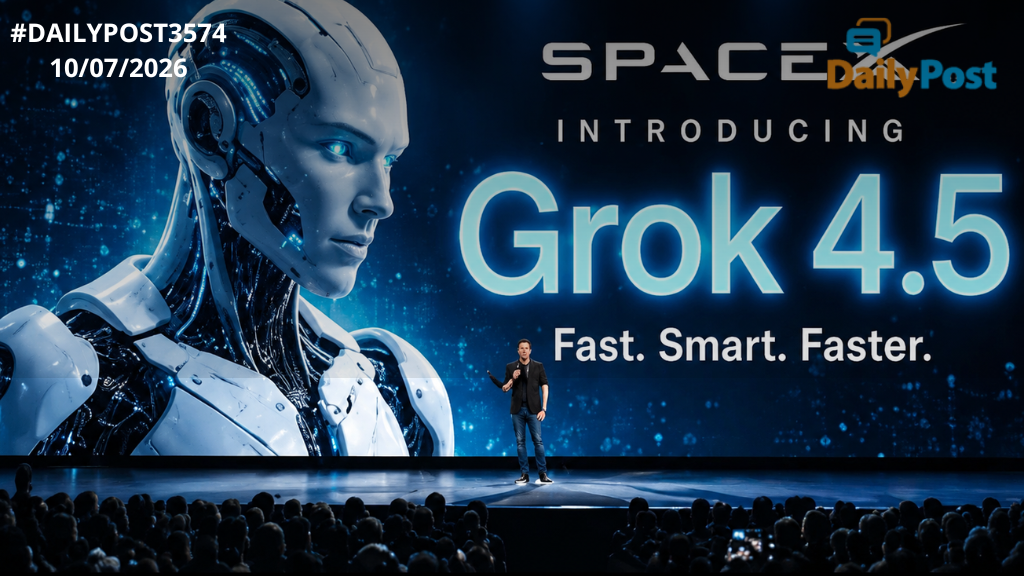
Grok 4.5 delivers those gains: benchmark parity near Claude Opus 4.8 and GPT 5.5 on coding and knowledge tasks, with about 80 tokens per second throughput and claimed 4× efficiency versus some rivals. Pricing is aggressive at roughly $2/$6 per million input/output tokens, and early use inside Cursor and Grok Build is temporarily free, lowering the adoption barrier.
Compared with frontier peers, Grok 4.5 narrows capability gaps while outpacing many in speed and cost—making it attractive for latency-sensitive, cost-conscious apps like coding assistants and agent orchestration. Cursor’s Composer models also supply cross-pollinated improvements, suggesting mutual gains from the $60B acquisition and faster iteration cycles.
Is Grok back? Yes—as a disruptive contender that has improved quickly across recent releases. Long-term frontrunner status will depend on sustained model quality, safety tooling, ecosystem partnerships, and keeping its price-performance edge as rivals advance.
FOR USERS WATCHING COSTS AND SPEED, GROK JUST BECAME HARD TO IGNORE.
Sanjay Sahay
Have a nice evening.