
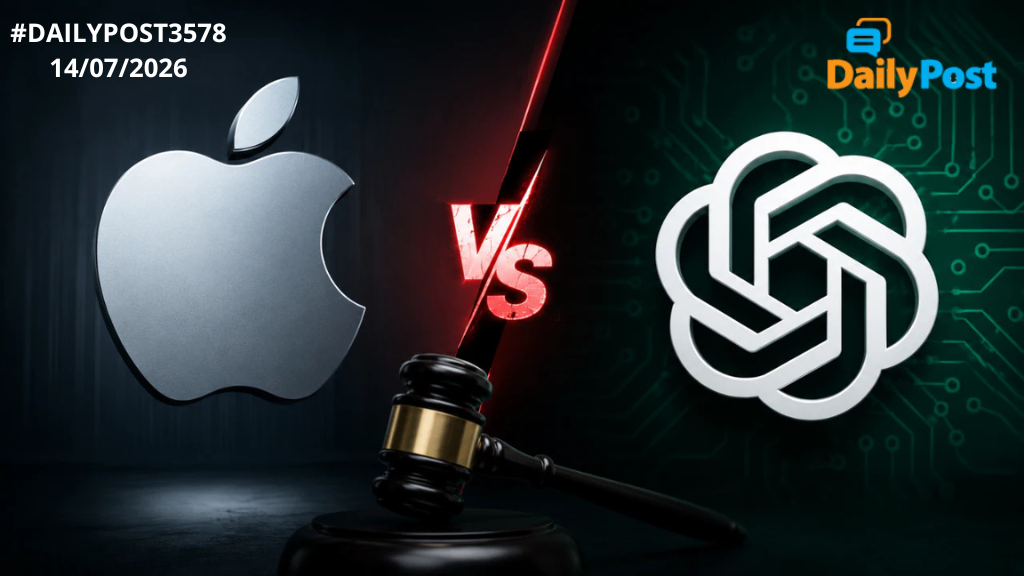
Apple has accused OpenAI of going beyond ordinary talent hiring and crossing into the territory of confidential hardware theft. The lawsuit claims that some former Apple employees may have carried sensitive know-how into OpenAI’s hardware efforts.
At the center of the case is the allegation that OpenAI’s hardware push was built, at least in part, on Apple’s unreleased ideas and internal secrets. Apple says this was not just competition for talent, but a deeper misuse of proprietary information.
The dispute has now escalated into a major legal and industry flashpoint. If Apple’s claims hold, OpenAI may be forced to rethink or redesign parts of its upcoming hardware plans, including the much-talked-about device linked to Jony Ive.
This case shows that the AI race is no longer only about smarter models and bigger salaries. It is also about control over ideas, design, and the future of consumer hardware.
TALENT MAY MOVE FAST, BUT SECRETS SHOULD NOT.
Sanjay Sahay
Have a nice evening.