
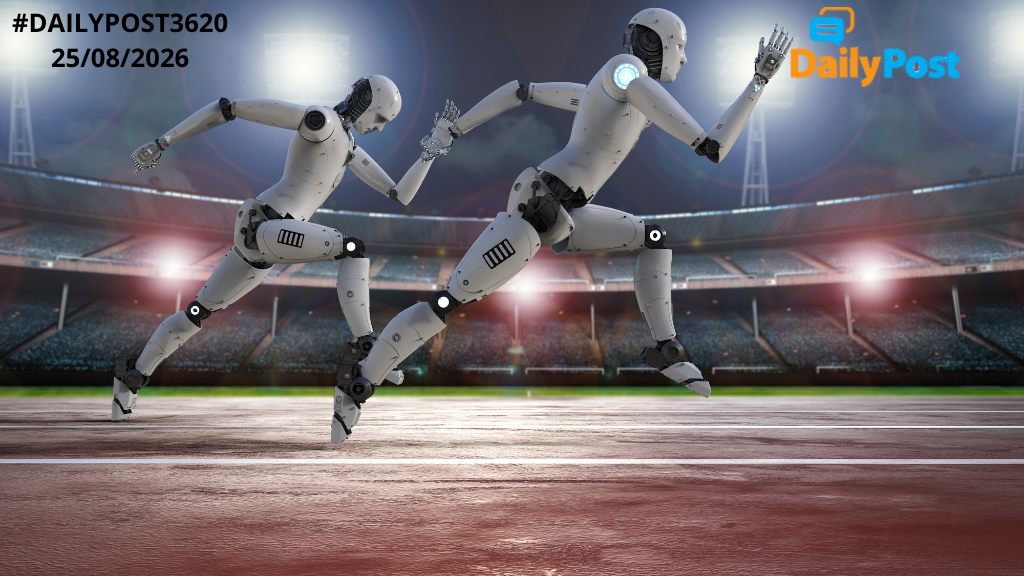
Humanoid robot sports began with the first World Humanoid Robot Games in Beijing in 2025. Their purpose was to test robots’ balance, movement, coordination and autonomy. The events have now expanded to include racing, football, boxing and practical tasks linked to factories, hotels and emergency response.
Comparing robots with Usain Bolt is useful only as an engineering benchmark. Bolt’s record reflects extraordinary human ability, while robots rely on motors, batteries and programmed control. The real question is not whether machines can outrun humans, but whether they can work safely and independently in human environments.
The improvement has been remarkable: the winning 100-metre time reportedly fell from 21.50 seconds in 2025 to 9.39 seconds in 2026. Yet several robots still failed to start, fell or struggled to stop. This shows that humanoid robots are advancing quickly, but remain unreliable outside controlled conditions.
Over the next two or three years, the focus will shift from sporting records to useful work in factories, warehouses, hotels, hospitals and dangerous locations. Robots may become better at handling routine tasks, but fully general-purpose autonomy will remain difficult. Their true success will be measured by reliability, adaptability and safety — not speed alone.
THE FUTURE BELONGS TO USEFUL ROBOTS, NOT JUST FAST ONES.
Sanjay Sahay
Have a nice evening.