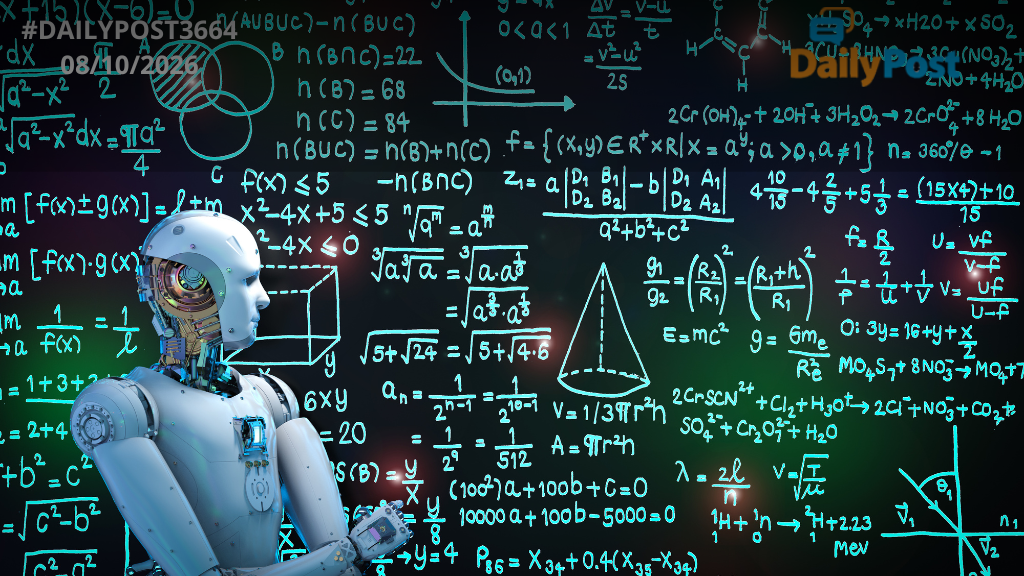
OpenAI has released more than 700 mathematical papers from an internal AI model. The papers reportedly contain 372 groups of results on difficult, open questions. Some claims are written in Lean, software that checks every step of a proof. One reported result concerns a weaker version of the famous Riemann hypothesis.
But mathematicians say a computer-generated answer is not automatically a breakthrough. Every proof still has to be checked, understood and accepted by experts. Some mathematicians have also criticised OpenAI for releasing so much material at once. They fear that quantity may overwhelm careful scientific evaluation.
This does suggest that computing power is becoming a new tool for discovery. Yet mathematics is not only about trying millions of possibilities very quickly. It also requires original ideas, clear explanations and knowing which questions matter. So the future may belong to humans and machines working together—not to computers alone.
The same approach could spread to medicine, physics, climate science and engineering. AI systems may test huge numbers of theories and identify patterns humans might miss. But difficult social problems involving law, ethics and human behaviour cannot be solved by computing alone. The real challenge will be deciding which machine-made answers deserve our trust.
MATHEMATICS MAY BE ENTERING THE AGE OF COMPUTE—BUT PROOF STILL NEEDS HUMAN JUDGMENT.
Sanjay Sahay
Have a nice evening.