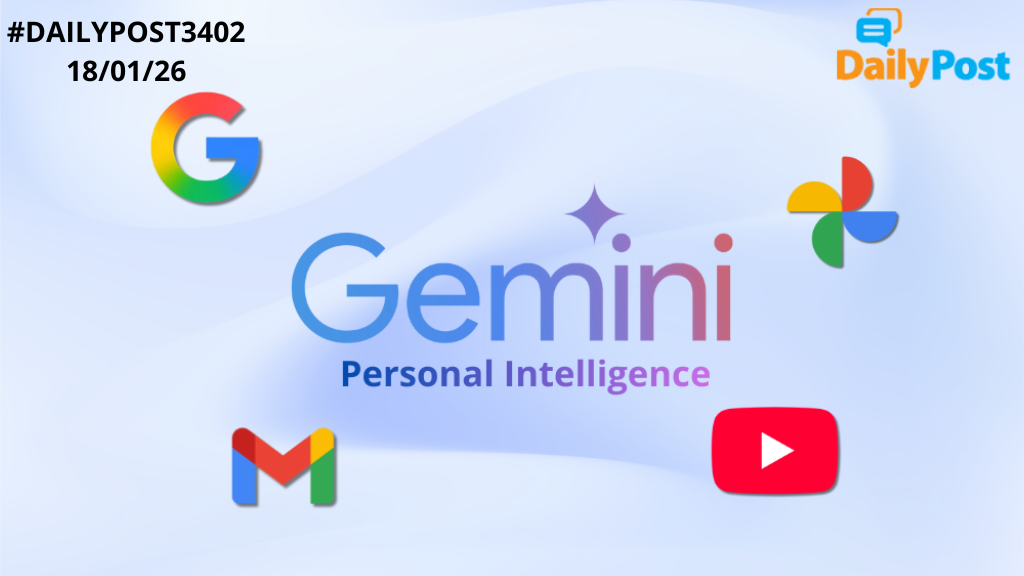
Google’s latest ‘Personal Intelligence’ upgrade for Gemini marks a pivotal shift in AI, enabling the model to seamlessly pull and reason across users’ Gmail, Photos, YouTube, and Search data without manual prompts. This beta feature, launched for Pro and Ultra subscribers in the US, transforms everyday apps into a powerful AI moat by delivering hyper-personalized responses—like referencing old emails or photos to solve real-world problems, as demoed by VP Josh Woodward at a tire shop.
Unlike generic generative AI tools that rely on broad training data, Personal Intelligence thrives on Google’s unparalleled ecosystem of billions of active users already embedded in its apps. It processes text, images, and videos contextually while keeping the feature opt-in and assuring no direct model training on private data, prioritizing privacy amid growing concerns over data usage in AI.
For companies lacking Google’s scale, building personal intelligence demands strategic alternatives: robust API integrations with third-party services like email providers or cloud storage, federated learning to access data without centralization, or user-consented knowledge graphs that aggregate personal info across devices.
Startups could leverage open ecosystems like Apple’s or Microsoft’s, but matching Google’s seamlessness requires massive user lock-in. Emerging players might explore edge AI on personal devices or blockchain-secured personal data vaults, yet Google’s head start underscores a harsh reality.
IN AI’S FUTURE, PERSONAL DATA ECOSYSTEMS WILL CROWN THE AI KINGS.