
Modern notetaking began with paper notebooks, but the digital shift came with apps such as Microsoft OneNote and Evernote in the 2000s. Later, Notion, Google Keep, Apple Notes and Microsoft’s AI tools turned notes into searchable, shareable workspaces. These services succeeded because they moved notetaking from simple typing to cloud storage, collaboration and automatic organisation.
The next step was the rise of AI meeting assistants such as Otter.ai, Fireflies, Granola and devices such as Limitless and Bee. They can transcribe speech, identify key points and prepare summaries, saving users from writing during meetings. Their success has been strongest among professionals and businesses, although privacy concerns, inaccurate transcripts and subscription costs have limited mass adoption.
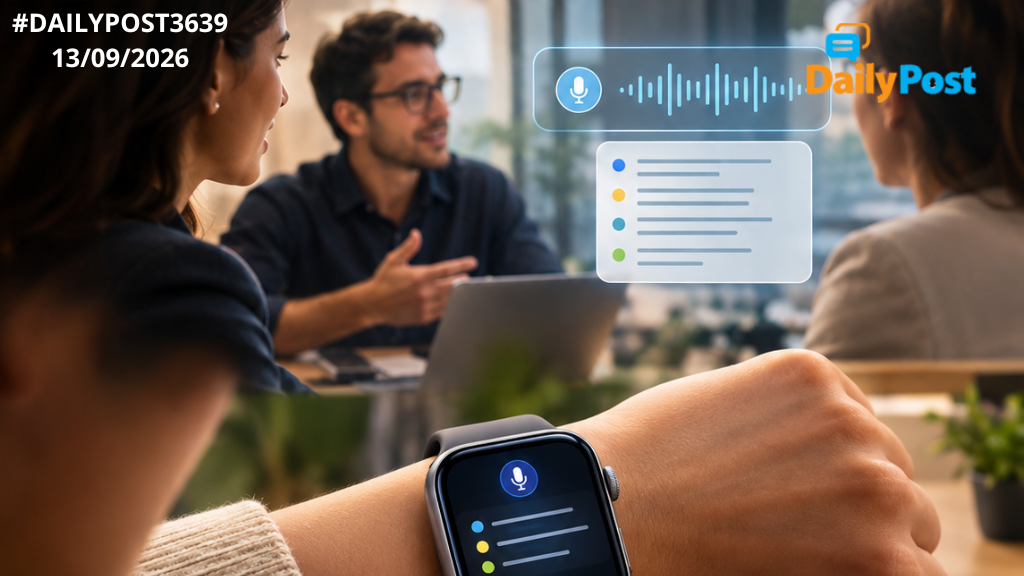
Apple is now bringing this idea to the wrist. Siri Recap, coming in beta later in 2026, will create a title and key points from conversations, while Live Rewind will show the previous 15 seconds as text after a double press of the Digital Crown. The features will initially be in English, require an Apple Watch Series 12 or Ultra 4 paired with a compatible Apple Intelligence iPhone, and will be opt-in. Apple says the raw audio is processed and deleted rather than stored.
This may not invent a new category, but it could make ambient note-taking mainstream because the Apple Watch is already worn throughout the day. Its biggest advantage is convenience: users can stay engaged in a conversation instead of constantly typing. But the real test will be accuracy, consent and trust — especially when people nearby do not know they are being processed.
THE NOTEBOOK IS NO LONGER IN YOUR HAND—IT IS LISTENING ON YOUR WRIST.
Sanjay Sahay
Have a nice evening.