
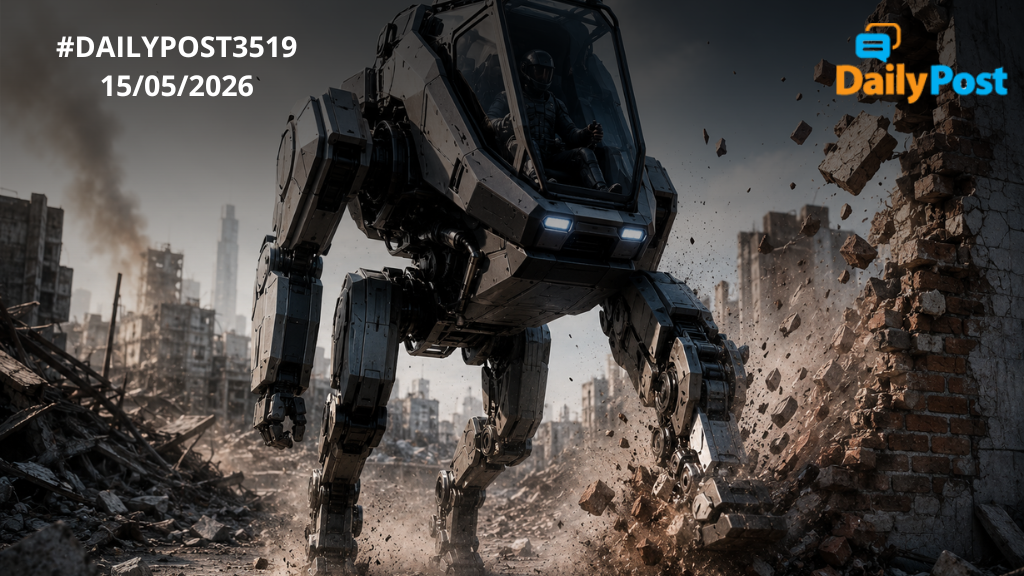
Unitree Robotics of China has unveiled the GD01, a human‑piloted, nine‑foot‑tall robot that switches between walking on two legs and crawling on four. It weighs about 500 kg with the pilot and can smash through brick walls, yet is marketed as a civilian transport machine for rough or hard‑to‑reach terrain. Priced around $650,000, it is one of the first mass‑produced “manned mecha” ever sold to the public.
The GD01 shows how humanoid‑style robots are moving from lab demos toward real‑world platforms. Unitree shipped over 5,500 humanoids in 2025, more than any other firm globally, giving it deep experience in legged‑robot mass production. The GD01 builds on that with mobility, strength, and a cockpit that lets a human steer it like a vehicle. Robots are transforming into rideable platforms.
China now supplies close to 90% of the world’s humanoid robots, with Unitree leading the pack in volume and speed to market. Rivals like Boston Dynamics focus on high‑end, niche machines, while Chinese peers such as AgiBot push logistics and service humanoids. Unitree’s mix of quadruped expertise, humanoid output, and now the GD01 gives it a strong edge in civilian‑focused uses.
In simple terms, the GD01 could be used for rescue in rubble zones, inspection inside dangerous industrial sites, or exploration over rough ground where cars or drones struggle. It can carry a person safely through unstable terrain, break barriers, and adapt its stance in seconds. While this first version is still expensive and experimental‑looking, it signals a new era where robots are not just programmed helpers but full‑size, rideable machines.
BEYOND SCIENCE FICTION, THE AGE OF RIDEABLE ROBOT WORKERS HAS BEGUN.
Sanjay Sahay
Have a nice evening.