
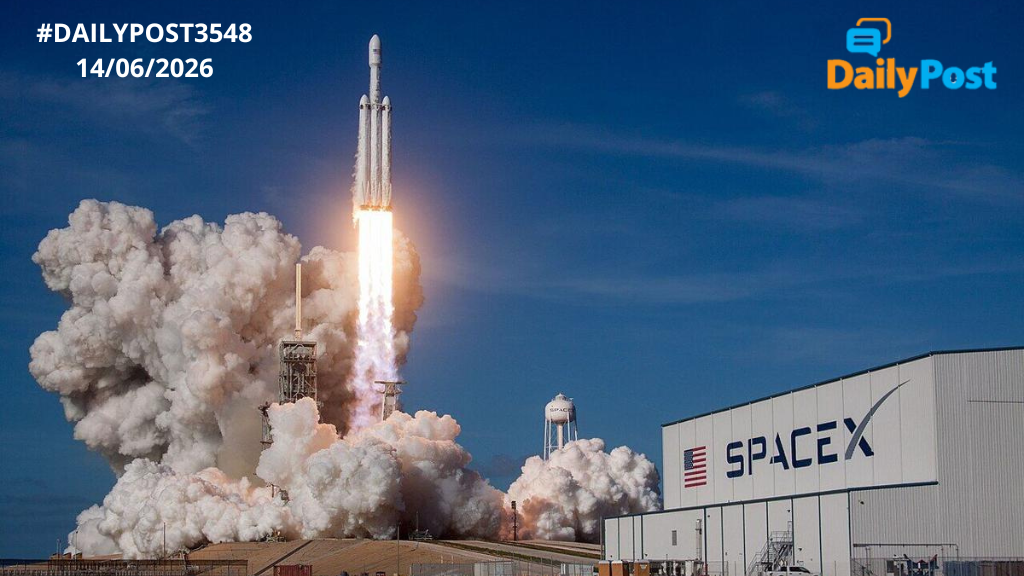
SpaceX’s $75B IPO succeeded because investors bet on Musk’s proven track record — reusable rockets, 90+ launches yearly, and Starlink’s 5M+ customers—plus a $28.5T market dream spanning AI data centers and Mars. Wall Street models SpaceX’s AI revenue growing 100x to $755B by 2031, justifying the $1.8T valuation despite the company losing $4.9B on $18.7B revenue in 2025.
For space industry, this marks a shift from government-led to private-dominated space: SpaceX now owns 85% voting control, enables orbital solar-powered data centers by 2028, and prioritizes a self-growing Moon city in under 10 years over Mars. Starship will commence payload delivery in H2 2026, deploying 500–1,200 V3 Starlink satellites that year.
Shareholders expect Moon base by ~2035, Mars city in 5–7 years, and AI orbital data centers starting 2028. SpaceX plans to fund AI compute infrastructure, launch facilities, and satellite constellations with IPO proceeds — delivering operational cargo Starship by June 2026, AI V1 prototypes in late 2026, and full-scale deployment by 2028.
India’s space sector (only 2% of $440B global market) lacks NASA-style procurement funding, faces legal vacuum without Space Activities Act, and struggles with 7–10 year gestation+ high capital needs. Lessons: create dedicated Space Venture Fund, enable private launchpad ownership, transfer ISRO tech via IN-SPACe, and focus on small satellites/data mining rather than heavy-lift rockets where SpaceX dominates.
$1.8T VALUATION ON PROMISES—DELIVER OR COLLAPSE.
Sanjay Sahay
Have a nice evening.