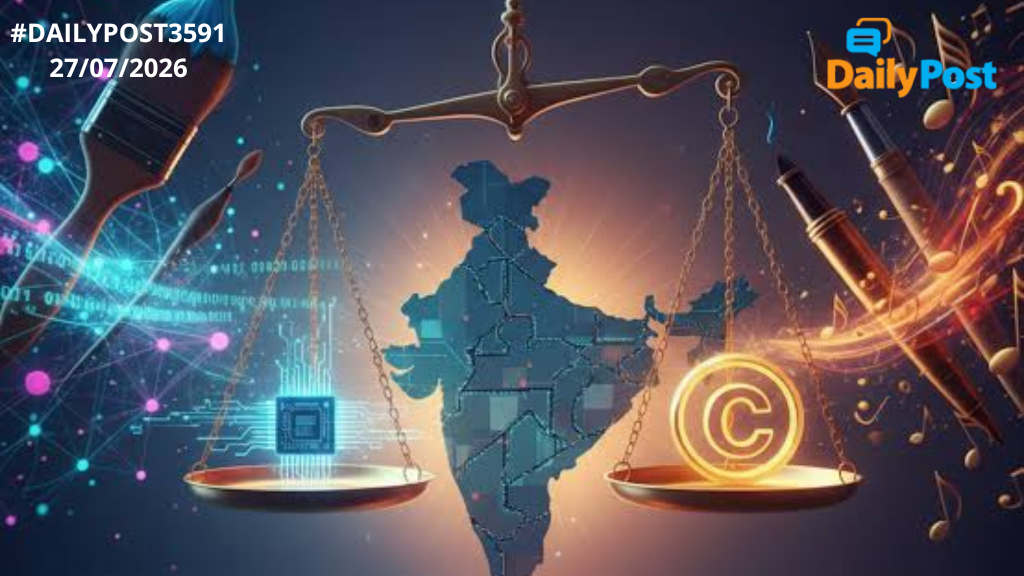
Copyright protects original expressions — literary, artistic and journalistic works—granting creators exclusive rights to reproduce, distribute and publicly display their content, while allowing limited exceptions like fair dealing for purposes such as criticism, news reporting or research under Section 52 of India’s Copyright Act.
Modern AI trains on vast text and media corpora by ingesting, indexing and statistically modelling content to learn patterns and generate outputs; this process can involve storing and transforming copyrighted works, and sometimes reproducing phrases or close paraphrases, raising questions about whether training and output fall within lawful exceptions or require licences.
Courts and regulators are wrestling with whether copying for model training fits fair dealing, when an AI output becomes unlawful reproduction versus permissible transformation, who bears liability for false or defamatory outputs attributed to publishers, and how far domestic courts can reach—Delhi HC’s interim view that training may prima facie be fair dealing while asserting jurisdiction reflects this balancing act.
Today’s stance is provisional: injunctions have been resisted, tests like substantial similarity are being refined, and policymakers are leaning toward transparency and tailored exceptions; likely we’ll see a hybrid approach combining statutory carve-outs for research, protections or remuneration for publishers, and regulatory duties on model builders to document datasets and curb misuse.
FAIR PROTECTIONS FOR CREATORS AND ROOM FOR RESPONSIBLE AI IS THE WAY FORWARD.
Sanjay Sahay
Have a nice evening.