
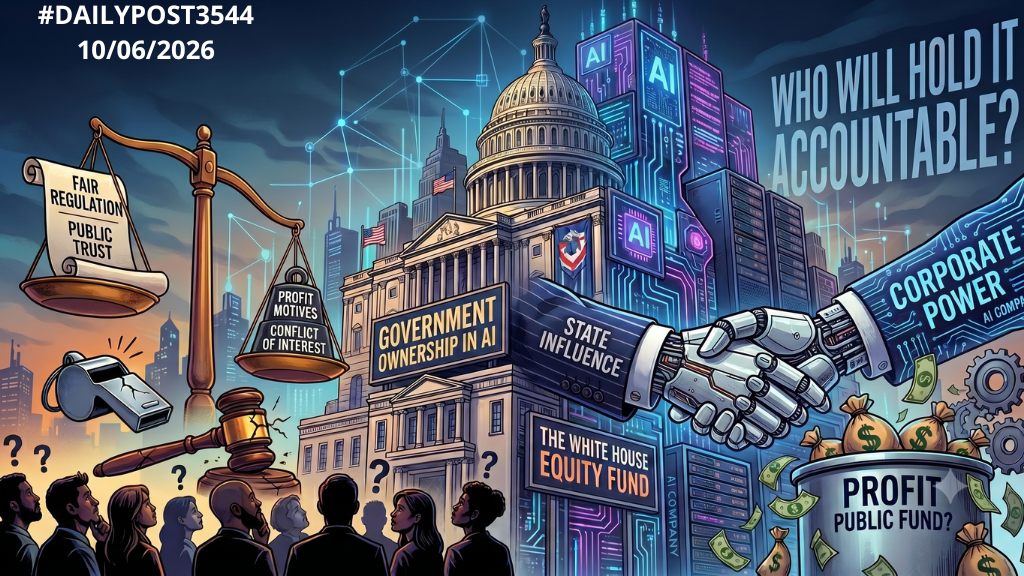
The White House has reportedly discussed taking an ownership stake in OpenAI and putting the shares into a public fund meant to share AI profits with ordinary Americans. The idea is sold as spreading wealth from the AI boom to people who’ve mostly missed out so far.
But this raises immediate conflicts. If the government owns part of an AI company and also regulates AI, it would be both referee and player — a setup that makes fair regulation hard to trust. Decisions about safety, competition, and public risk could be influenced by profit motives.
There’s also a big question about whether the promised payouts will ever reach everyday people. Promises of a public fund sound good, but the mechanics, timing, and size of any payments are unclear. Meanwhile, the technology itself is still largely unregulated and moving fast.
Before any ownership deal proceeds, the government must fix governance gaps: independent oversight, strict conflict-of-interest rules, and a credible plan to deliver benefits to the public. Without those safeguards, buying equity risks accelerating a risky fusion of corporate power and state influence — not protecting citizens.
ONCE THE STATE BECOMES A SHAREHOLDER, WHO WILL HOLD IT ACCOUNTABLE?
Sanjay Sahay
Have a nice evening.